DIY wedding flowers vs pro florists: cost and quality
Posted on 17/09/2026
Choosing between DIY wedding flowers and a professional florist sounds simple at first. Then the numbers start creeping up, the timing gets tighter, and you realise flowers are not just "pretty bits on the day". They shape the look of the ceremony, the table styling, the bouquet photos, and, frankly, your stress level.
This guide breaks down DIY wedding flowers vs pro florists: cost and quality in plain English. We'll look at what you really pay for, where quality differences show up, when DIY makes sense, when a florist is the safer bet, and how to avoid the classic mistakes that turn a money-saving idea into a very long Sunday night with secateurs. Let's face it, no one wants wilted roses and a panicked relatives-at-the-kitchen-table moment before the registrar arrives.
If you are still weighing up the wider wedding budget, it can help to think about flowers alongside other essentials, not in isolation. For a broader sense of how wedding-related purchases are presented on the site, you can also browse wedding flowers and collections or look at the options for bridal bouquets, bridesmaid bouquets, and table arrangements.
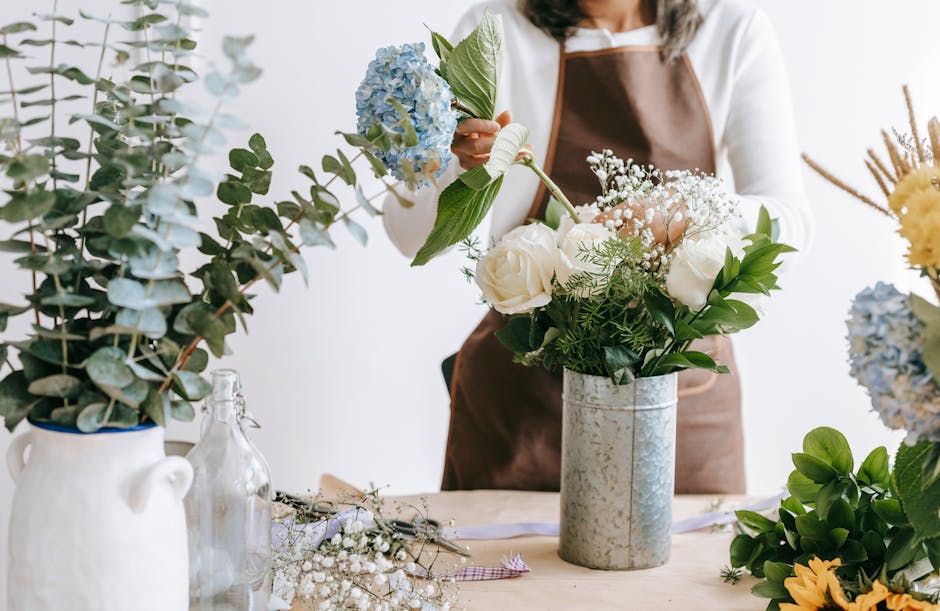
Why DIY wedding flowers vs pro florists: cost and quality Matters
The short version? Flowers are one of those wedding details where cost and quality are tied together more tightly than people expect. A DIY approach can save money on labour, design time, and delivery, but it also transfers the work, risk, and decision-making onto you and your helpers. A professional florist charges more, yes, but that fee often includes expertise, design consistency, transport planning, stem handling, and the sort of calm judgement you only really appreciate when the hydrangeas are starting to look a bit dramatic in the hallway.
Quality matters because wedding flowers do more than sit there and look nice. They need to survive transport, sit through a morning of prep, cope with warm rooms, and still look fresh when the photographer starts lining everyone up by the window. A bouquet can be beautiful for five minutes on a kitchen table. That is not the same as being wedding-ready for eight hours.
Cost matters because the flowers themselves are only part of the bill. With DIY, the hidden costs are often buckets, floral foam alternatives, snips, ribbon, tape, cool storage, extra stems for mistakes, and the time spent learning basic floristry. With a pro, the hidden value is the planning. You are paying for someone to know which blooms bruise easily, how to keep arrangements stable, and how to size everything so it looks balanced in real life, not just in a Pinterest board.
Here is the simple truth: the cheaper option on paper is not always cheaper in practice. The best choice depends on your budget, your confidence, your schedule, and how much margin for error you can tolerate on the week of the wedding.
Expert summary: DIY wedding flowers can be cost-effective for simple designs and small guest counts, while pro florists usually deliver better consistency, convenience, and finish for high-pressure or detail-heavy weddings. The real decision is not just price; it is time, risk, and how important a polished result is to you.
How DIY wedding flowers vs pro florists: cost and quality Works
How DIY works in practice
DIY wedding flowers usually means you either buy stems from a wholesaler, supermarket, flower market, or specialist online shop, then design and assemble the arrangements yourself. That might include bridal bouquets, bridesmaid bouquets, buttonholes, centrepieces, ceremony pieces, and simple vase arrangements. Some couples do all of it; others only DIY one or two elements, like guest table arrangements or simple bud vases, and leave the bouquet to a pro.
The appeal is obvious. You control the flower choice, the colour palette, and the budget line by line. If you are organised and fairly calm under pressure, you may find the process enjoyable. There is something very satisfying about trimming stems at the right angle while the kettle boils and the room smells faintly green and fresh. A bit messy, yes. But fun too.
Still, DIY is a production line. You need time for sourcing, prep, conditioning, design trial runs, and the actual assembly. The quality outcome depends heavily on your skill, the freshness of the flowers, and how realistic your design goals are. A loose garden-style bouquet is usually more forgiving than a tightly structured cascade arrangement. That matters more than people think.
How a professional florist works
A pro florist starts with the brief, the season, the venue, and the practicalities. They should ask about the ceremony space, table sizes, dress colours, the timing of delivery, and whether you want the flowers to photograph softly or make more of a statement. They then source stems, prep them properly, design the pieces, and deliver or set up arrangements so they hold their shape through the event.
In quality terms, the big advantage is consistency. A professional is less likely to overpack a bouquet, misuse a delicate flower, or under-specify the quantity needed for a fuller look. They also understand substitution. If one bloom is unavailable, they will usually know what can replace it without breaking the visual plan. That sounds small, but on a wedding week it is huge.
Pro florists also reduce stress. You do not spend the evening before the wedding wondering whether the roses have opened too far. You do not need to beg a cousin to drive a car full of buckets across town. You can, instead, get dressed and breathe for a minute.
Where the cost difference really comes from
People often compare the price of stems in DIY to the final florist quote and conclude the florist is expensive. Sometimes that is fair. But the comparison is incomplete.
DIY cost usually includes:
- Flowers and greenery
- Floral tools and sundries
- Extra stems for trial and error
- Containers, ribbons, and wraps
- Transport and storage
- Your time, plus anyone helping you
Florist cost usually includes:
- Design expertise
- Flower sourcing and ordering
- Conditioning and prep
- Construction of arrangements
- Delivery and setup, where offered
- Planning support and contingency knowledge
So yes, DIY often looks cheaper. But the real question is: cheaper than what, exactly? Cheaper than a florist's final installed result? Usually. Cheaper than the stress, lost time, and potential mistakes? That depends.
Key Benefits and Practical Advantages
Benefits of DIY wedding flowers
DIY flowers are a good fit when you want control and flexibility. You can choose seasonal blooms, shop around, and adjust the design without waiting for a quote revision. If your wedding is small or relaxed, that freedom can be brilliant.
- Lower material spend: you avoid labour and design fees.
- Creative control: you choose the exact look and feel.
- Flexible scale: you can keep things simple or build gradually.
- Personal involvement: some couples genuinely enjoy making the flowers together.
There is also an emotional side. A hand-made bouquet can feel deeply personal, especially if you are using blooms with family meaning or colours that echo the venue. A few brides and grooms enjoy making it part of the pre-wedding ritual, almost like an informal workshop with tea, music, and a lot of dropped petals. It can be lovely, honestly.
Benefits of using a professional florist
A florist gives you expertise, neatness, and reliability. That is the headline, but the practical value goes deeper.
- Professional finish: arrangements tend to look more refined and balanced.
- Better handling of fragile stems: useful for peonies, orchids, lilies, and mixed designs.
- Event-day peace of mind: no late-night assembly session.
- Venue-aware design: arrangements can be sized to suit the space.
- Fewer surprises: the florist should anticipate most of the awkward bits before they happen.
For bigger weddings, or ones with many moving parts, pro support often improves quality in ways guests notice even if they cannot quite say why. The flowers simply look settled. They belong there.
The quality trade-off in plain language
DIY can absolutely look beautiful, but the finish may be less uniform. You may see more variation between bouquets, uneven height in centrepieces, or a few stems that open too early. A florist is more likely to deliver a polished, cohesive result across all items.
To be fair, not every wedding needs that level of polish. If your venue is rustic, intimate, or intentionally informal, slightly wild and hand-made flowers can suit the mood better than ultra-structured arrangements. Quality is not always about perfection. Sometimes it is about fit.
Who This Is For and When It Makes Sense
The best choice depends on the type of wedding you are planning and the amount of pressure you want to carry in the final week.
DIY is usually a good fit if you:
- Have a smaller guest list
- Want a simple colour palette
- Enjoy creative projects
- Have reliable helpers
- Can store flowers properly before the wedding
- Are happy with a slightly less uniform finish
A professional florist is usually better if you:
- Need multiple bouquets and table pieces
- Want a high-end or highly styled look
- Have little time in the week before the wedding
- Are using delicate or expensive flowers
- Need delivery, setup, and coordination with the venue
- Prefer not to gamble on last-minute stress
There is a middle ground too, and it is often the smartest one. Some couples order the key pieces from a florist, such as the bridal bouquet and buttonholes, then DIY the simpler elements like vase arrangements or bud vases. That approach can protect quality where it matters most while still keeping the budget under control.
If you are planning a classic wedding look, a curated set such as a wedding collection can give you a sense of how bouquets, buttonholes, and table pieces hang together visually before you commit.
Step-by-Step Guidance
Step 1: Decide what you actually need
List every floral item for the day: bouquet, bridesmaid bouquets, buttonholes, ceremony flowers, table arrangements, registrar table flowers, and any extras like petals or gift flowers. People often underestimate this part. A single bouquet feels manageable. Eight separate items, plus transport, not so much.
Step 2: Choose your priority pieces
Decide which flowers absolutely must look polished. For many weddings, that means the bridal bouquet, groom's buttonhole, and one or two focal arrangements. If you are going to spend professionally on anything, spend there first.
Step 3: Compare like for like
Do not compare a florist quote for full-service design with a DIY budget that only counts blooms. Include the extras. Include enough flowers for testing, because first attempts are rarely perfect. Truth be told, the first bouquet usually looks like the "before" photo in a makeover reel.
Step 4: Check the season and stem availability
Some flowers are easier and cheaper when they are in season. Others can be expensive, hard to source, or fragile. If your dream design depends on a difficult stem, a professional may have a better route to obtaining it, or a better substitution plan if it is unavailable.
Step 5: Build a realistic prep schedule
DIY flowers need a cooling, trimming, hydrating, and assembly window. Do not leave everything until the wedding morning unless you genuinely know what you are doing and have plenty of hands. A simple schedule might look like this:
- Order flowers with a cushion for substitution or breakage
- Collect and condition them as soon as they arrive
- Prep ribbons, tape, and containers the night before
- Make trial pieces first
- Assemble priority items last
- Store finished pieces in a cool, safe place
Step 6: Arrange transport and handling
Flowers bruise easily. Secure buckets, keep arrangements upright, and avoid hot cars where possible. If the venue is a longer drive away, a florist delivery service can save a surprising amount of hassle. The difference between "arrived looking lovely" and "arrived with a floppy hydrangea situation" is often just logistics.
Expert Tips for Better Results
Here is where a bit of practical experience pays off.
- Pick forgiving flowers for DIY: roses, carnations, alstroemeria, chrysanthemum types, and germini tend to be easier to handle than highly delicate stems.
- Keep the palette tight: two to four colours usually looks more elegant and is easier to coordinate.
- Mix focal flowers with fillers: you get volume without overspending on premium stems.
- Use greenery carefully: a little can soften the design, but too much can make arrangements look sparse rather than intentional.
- Do a trial bouquet: even a rough mock-up helps you spot proportion issues before the big day.
- Ask about care: if you buy prepared flowers or ready-made wedding pieces, follow the care guidance closely so they stay fresh.
One small but important tip: if you are using flowers in photos outdoors, factor in wind. A beautiful bouquet on a sheltered kitchen counter can behave very differently in a breeze outside a church or venue. Flowers have opinions. There, I said it.
If you want a simple reference point for finished presentation, look at the style of bridal bouquets or buttonholes to compare what a polished final piece should feel like in scale and structure.
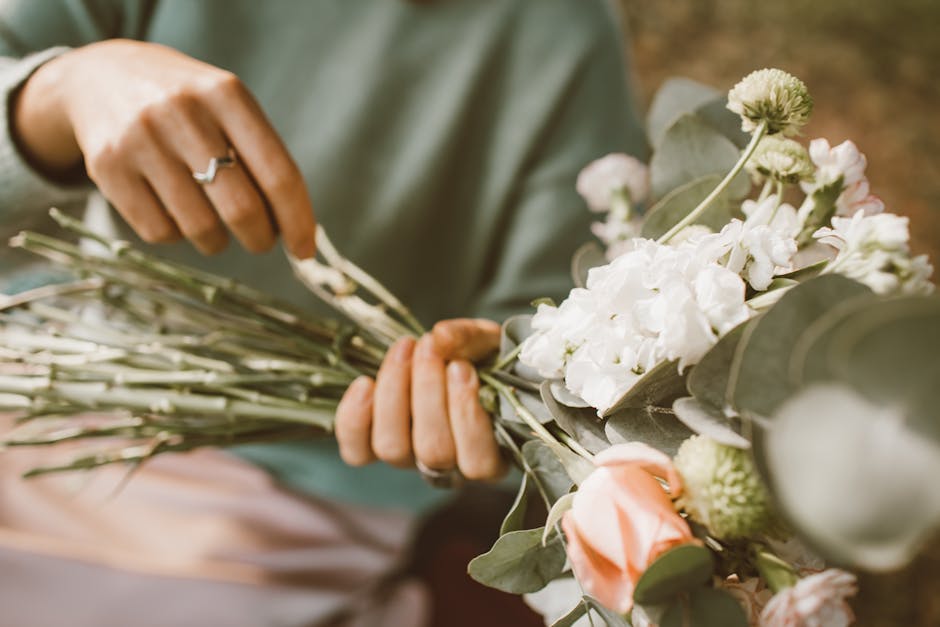
Common Mistakes to Avoid
The biggest mistakes are rarely dramatic. They are usually small, boring, and very fixable if you notice them early.
- Underestimating time: arranging flowers takes longer than most people expect.
- Buying too few stems: bare spots and last-minute panic follow fast.
- Choosing difficult blooms for a first DIY attempt: it is tempting, but not wise.
- Ignoring temperature and water needs: fresh flowers dry out quickly in warm rooms.
- Forgetting transport: if arrangements are not secured, they can arrive looking tired.
- Making every item equally elaborate: this drives up DIY cost and stress without always improving the overall look.
Another common issue is trying to copy a very luxurious floral design on a modest budget without adjusting expectations. That usually ends in disappointment. Better to choose a simpler, clean style and execute it beautifully. Simple done well looks expensive. Simple done badly, sadly, just looks simple.
Tools, Resources and Recommendations
You do not need a professional studio to make decent wedding flowers, but you do need the right basics.
Useful DIY tools
- Sharp floral snips or scissors
- Clean buckets for hydration and transport
- Floral tape and/or binding materials
- Ribbon or wrap for bouquet finishes
- Flower food where appropriate
- A cool, shaded storage spot
- Paper towels and clean cloths for tidying stems
Useful planning resources
Within this site, the wedding collections can help you visualise what coordinated pieces look like together. Start with wedding arrangements and then compare with individual items like bridesmaid bouquets, table arrangements, and wedding corsages. If you are still at the early research stage, about us can also give you a better sense of the business style and approach behind the florist side of the website.
For practical flower handling once the arrangements are in your home or venue, flower care guidance is worth a read. That sort of detail sounds small until you are trying to keep bouquets fresh for photos. It really matters.
Law, Compliance, Standards, or Best Practice
For most couples, there is no special legal framework just for wedding flowers, but there are still sensible best practices. If you are working with a venue, check their setup times, access arrangements, and any rules around candles, water containers, or installation. Some venues are relaxed; others are very particular, and for good reason.
If you are creating DIY arrangements, basic health and safety still applies. Keep paths clear while transporting buckets, use clean tools, and store sharp items safely away from children and pets. If you are asking friends or family to help, be clear about what they are doing so no one feels roped into a task they did not agree to. That seems obvious, but on a wedding week, obvious things get forgotten.
For florists and suppliers, best practice usually means accurate order confirmation, clear delivery timing, and a sensible substitution policy. If you are buying prepared wedding flowers, read the terms around payment, delivery, and refunds carefully. It is always easier to sort expectations before the van leaves than after a bouquet has already reached the venue.
Where sustainability matters to you, ask how stems are sourced, whether designs are reusable, and what can be repurposed after the ceremony. The website's sustainability statement can be a useful starting point if those values are part of your decision-making.
Options, Methods, or Comparison Table
Sometimes the best way to compare DIY wedding flowers vs pro florists: cost and quality is to look at the practical trade-offs side by side. Not every wedding needs the same level of service, and not every budget should be stretched in the same way.
| Factor | DIY Wedding Flowers | Professional Florist |
|---|---|---|
| Upfront cost | Usually lower for materials | Usually higher due to labour and design |
| Time required | High | Low for the couple |
| Design consistency | Can vary between items | Usually more uniform and polished |
| Stress level | Higher, especially near the day | Lower, because setup is handled for you |
| Risk of mistakes | Moderate to high if inexperienced | Lower, though substitutions can still happen |
| Best for | Simple, small, budget-conscious weddings | Complex, formal, or high-pressure weddings |
| Creative control | Very high | High, but guided by florist expertise |
| Final finish | Depends heavily on skill and time | Usually more refined |
A hybrid method deserves a mention too. For many couples, it offers the most sensible balance:
- Use a florist for the bridal bouquet and key focal pieces
- DIY smaller table arrangements or simple bud vases
- Keep the colour palette limited so everything still feels joined up
That approach often gives you the emotional confidence of having the important flowers professionally handled, while still trimming the total spend. It is not glamorous, but it is smart.
Case Study or Real-World Example
Imagine a couple planning a late-spring wedding at a village hall in the South East. They want a relaxed look: soft pinks, whites, greenery, and not too much formality. There are 40 guests, a short ceremony, and a reception with six tables.
At first, they think DIY is the obvious answer. A friend has done flowers before, and the idea of making the arrangements together on the eve of the wedding sounds quaint and affordable. Nice in theory. Then they map it properly.
They need a bridal bouquet, two bridesmaid bouquets, four buttonholes, six table arrangements, and flowers for the ceremony table. They also need buckets, ribbon, cutters, and a space to store everything overnight. Once they count the time, they realise their rehearsal dinner evening is not actually free. One relative is travelling. Another has no car boot space. The plan starts wobbling a bit.
In the end, they choose a hybrid setup. A florist handles the bridal bouquet, buttonholes, and ceremony flowers, while the couple creates the table arrangements using a simpler design. The result is not the cheapest possible option, but it is calm, beautiful, and manageable. The tables look coordinated. The bouquet photographs well. Nobody is running around with a damp tea towel at 7 a.m.
That is the real lesson: the best flower plan is often the one that matches your energy, not just your budget.
Practical Checklist
Use this quick checklist before you commit to DIY, a florist, or a mix of both.
- Have you listed every floral item needed for the day?
- Do you know which items matter most visually?
- Have you compared total DIY costs, not just flower stems?
- Do you have enough time for prep and assembly?
- Will someone help you with transport or setup?
- Are the flowers suitable for the season and your skill level?
- Have you decided how you will keep them cool and hydrated?
- Do you have a backup plan if blooms arrive damaged or open too quickly?
- Have you checked the venue's access and setup rules?
- Do you feel calm about doing this two days before the wedding?
If that last question makes your stomach tighten a little, listen to that feeling. It is usually useful.
Conclusion
DIY wedding flowers vs pro florists: cost and quality is not really a battle between good and bad. It is a trade-off between budget, time, design confidence, and the level of finish you want on the day. DIY can be rewarding and cost-effective, especially for simple weddings and smaller flower plans. A professional florist, on the other hand, brings polish, consistency, and a great deal of reassurance when the stakes are higher.
The smartest decision is often the one that protects your peace as well as your wallet. If flowers are central to the look of your wedding, a florist may be worth every penny. If you love hands-on projects and the design is modest, DIY can be a lovely way to personalise the day. And if you are somewhere between the two, honestly, that is where many couples land. Sensible. Very sensible.
Get a free quote today and see how much you can save.
However you choose to handle the flowers, aim for arrangements that feel right in the room, right in the photos, and right for you. That is the bit people remember.
Frequently Asked Questions
Is DIY wedding flowers cheaper than hiring a florist?
Usually, yes, at least on paper. DIY often reduces labour and design costs, but you still need to budget for tools, transport, storage, and a cushion for mistakes or extra stems.
Do professional florists always look better than DIY flowers?
Not always, but they usually provide a more consistent finish. A confident DIY bride or groom can create something lovely, especially with simple designs and forgiving flowers.
What flowers are easiest for DIY wedding arrangements?
Roses, carnations, alstroemeria, chrysanthemums, and germini are generally more forgiving than very delicate or expensive blooms. They tend to hold up better while you are learning.
Which wedding flowers are best to leave to a florist?
The bridal bouquet, large ceremony pieces, and anything structurally complex are often best left to a professional, especially if they need to look perfect in photos for hours.
How far in advance should I plan DIY wedding flowers?
Ideally, begin planning several weeks ahead. You will want time to source flowers, test the design, gather tools, and work out who is helping on the day.
Can I mix DIY flowers with a florist order?
Yes, and it is often the most practical option. Many couples use a florist for the important pieces and DIY the simpler arrangements to control costs.
What hidden costs should I expect with DIY wedding flowers?
Expect to pay for buckets, cutters, ribbon, tape, transport, extra flowers for trial runs, and possibly extra containers or cooling space. The little bits add up quietly.
How do I keep wedding flowers fresh before the ceremony?
Keep them cool, hydrated, and out of direct sunlight. Follow any care instructions closely, and avoid leaving finished pieces in a warm room or car for long periods.
Are florist wedding packages worth it?
They can be, especially if you want a coordinated look without spending hours managing every detail. Packages are useful when you want clarity and a simpler planning process.
What is the biggest mistake couples make with DIY wedding flowers?
The most common mistake is underestimating time. People focus on the flowers themselves and forget the prep, assembly, storage, and transport involved.
How do I decide between cost and quality for my wedding flowers?
Start by ranking your priorities: budget, look, convenience, and stress reduction. If the flowers are a major visual feature, quality may matter more than a small saving. If the wedding is intimate and low-key, DIY may be perfectly enough.
Do I need to think about sustainability when choosing wedding flowers?
If it matters to you, yes. You can look at seasonal stems, reusable arrangements, and simple designs that avoid waste. That choice is often easier to make when you plan ahead instead of leaving it to the last minute.